
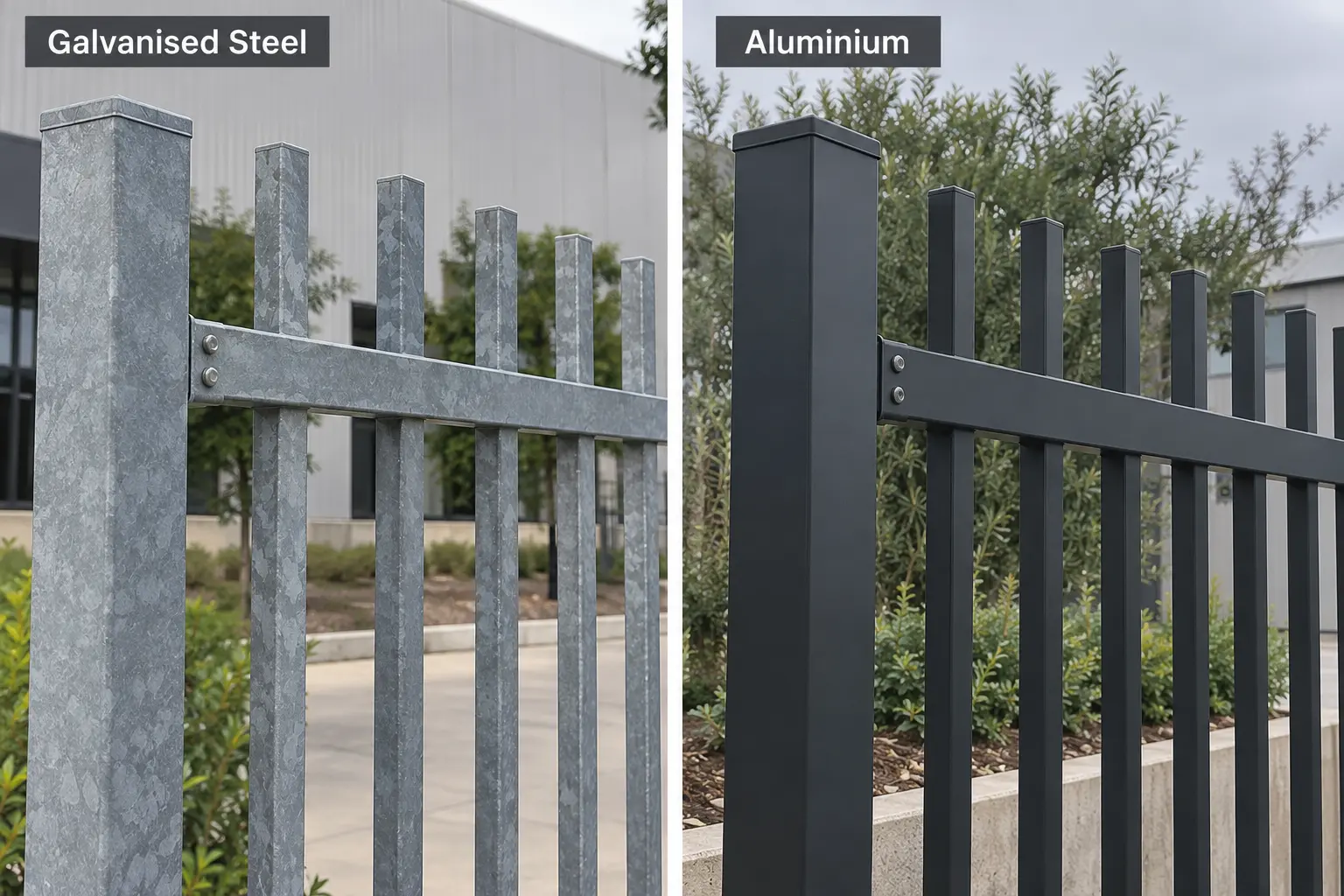
Choosing a top profile? Compare flat top, rod top and spear top fencing by appearance, project use and specification priorities.
Galvanised steel offers greater stiffness; aluminium offers lower weight and avoids the red rust associated with steel. For rod top fencing, the better choice depends on whether the project places more importance on resisting bending, limiting corrosion maintenance or reducing gate weight.
When comparing rod top fence materials, start with the same fence height, panel span and loading requirements. Then compare the rods, rails, posts and gates each supplier proposes. Two panels that look alike can behave differently because their sections, connections and coatings differ.
Compare Structure, Corrosion and Appearance Separately
A fence can remain structurally sound while its colour fades. It can also look tidy while water collects inside a poorly drained connection. Durability involves three separate questions: will the fence hold its shape, will its metal components resist corrosion, and will its finish retain an acceptable appearance?
“Rod top” describes a fence style, not a material grade. Before comparing durability, confirm the actual top detail and whether the vertical members are solid rods or hollow pickets. The product name alone does not establish either.
Compare the proposed steel and aluminium designs against the same performance target. Each material may need a different section to meet it; identical wall thickness does not establish equivalent performance.
| Decision factor | Galvanised steel | Aluminium |
|---|---|---|
| Resistance to bending | Higher material stiffness for the same section geometry | Lower material stiffness; profile design can compensate |
| Corrosion protection | Relies on the zinc system, with an optional compatible powder finish | Natural oxide protection; alloy, finish and connections still matter |
| Fabrication details | Check welds, cut ends and the galvanising sequence | Check alloy, temper, weld quality and joint design |
| Handling and gates | Greater weight affects lifting, hinges and posts | Lower weight can simplify handling and reduce gate dead load |
| Coastal exposure | Assess zinc protection, coating suitability and repair access | Assess pitting risk, pretreatment and dissimilar-metal contact |
| Long-term appearance | Depends on the outer finish and exposure | Also depends on the outer finish and exposure |
These are material-level differences, not test results for particular fence panels. For the steel system's available configurations, see our steel rod fence panels.
Where Does Galvanised Steel Offer a Durability Advantage?
Stiffness is different from resistance to permanent bending
With the same cross-section, span and supports, a steel member bends less than an aluminium member under the same elastic load. This follows from steel's higher elastic modulus. Aluminium designs can compensate by changing the section geometry.
Steel is worth considering when the design calls for slender members with limited deflection. But stiffness does not prove impact resistance or resistance to permanent bending. A thin steel picket, a weak weld or an inadequate bracket can still become the weak point.
Request the rod or picket section, rail section and connection details, together with the calculations or tests required by the project. Those records make a claim such as “more rigid” meaningful.
Choosing between two steel protection routes
TOPSFENCE can offer both of the following routes, subject to the agreed specification:
| Steel route | Durability question to resolve |
|---|---|
| Pre-galvanised material, then fabrication and powder coating | How are weld-affected areas, cut ends and holes protected before the final finish? |
| Fabrication, then hot-dip galvanising and powder coating | Can zinc reach the required surfaces, and are venting, drainage and powder-coating preparation suitable? |
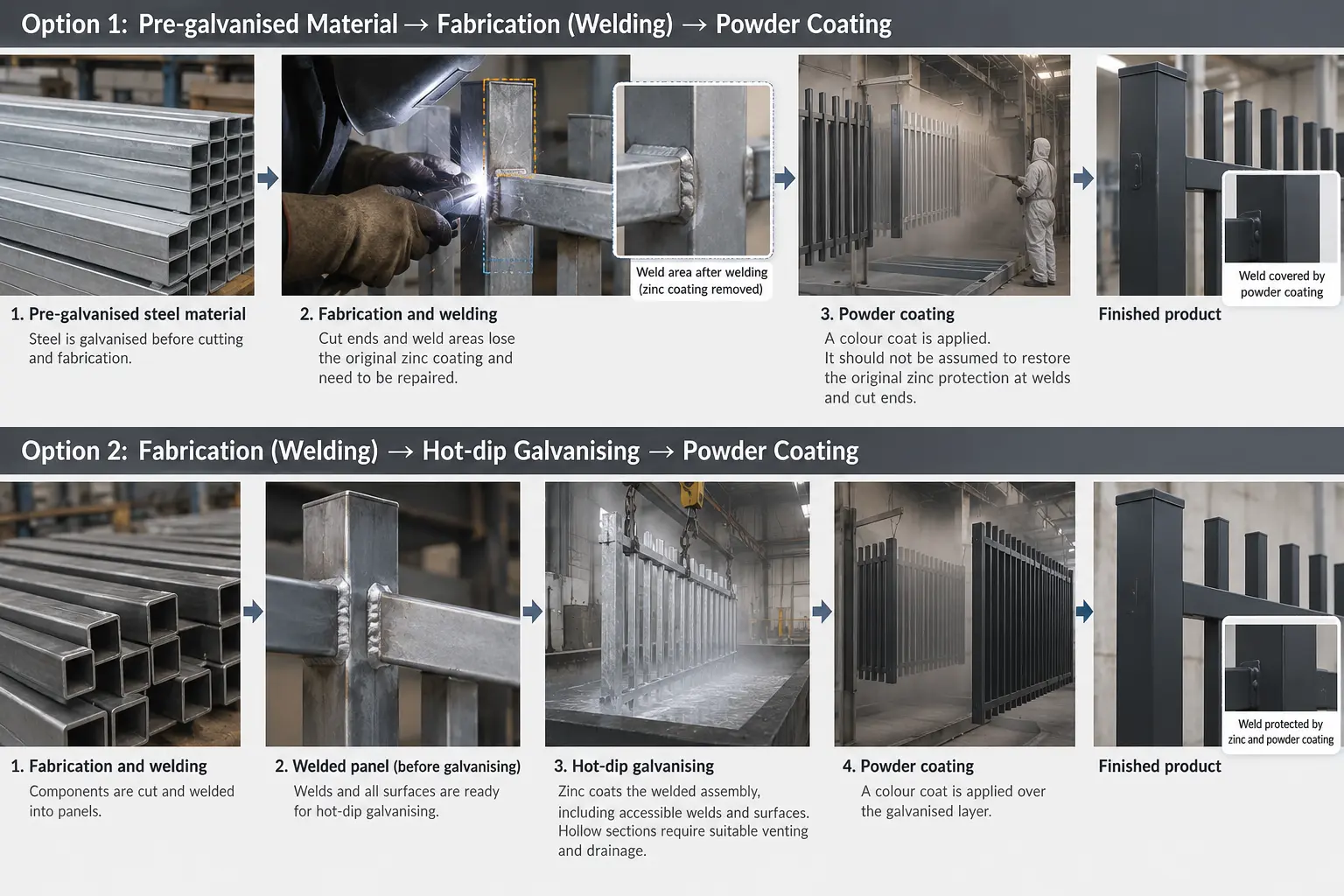
Welding previously galvanised steel can leave areas needing restored protection. Those areas require appropriate repair before the final finish. A colour coat should not be assumed to restore the original zinc protection.
Galvanising after fabrication can coat accessible welds and surfaces as part of the finished assembly. Hollow members require suitable openings for the process; do not assume every cavity is protected simply because the outside is galvanised.
For a welded rod top panel, request a close-up of a rod-to-rail joint and the corresponding coating specification. A photograph can reveal visible defects; coating measurements and process records are needed to substantiate the protection claim.
Where Does Aluminium Have the Advantage?
Aluminium forms a protective oxide layer and does not develop the red rust associated with iron and steel. This is a useful advantage where a buyer wants to avoid steel rust staining and reduce dependence on an intact zinc layer.
Lower material density can reduce panel handling weight and gate self-weight. Compare actual gate weights and frame designs: different profiles mean the weight difference between finished gates will not necessarily match the difference between the raw metals. Hinges and posts must still suit the proposed gate.
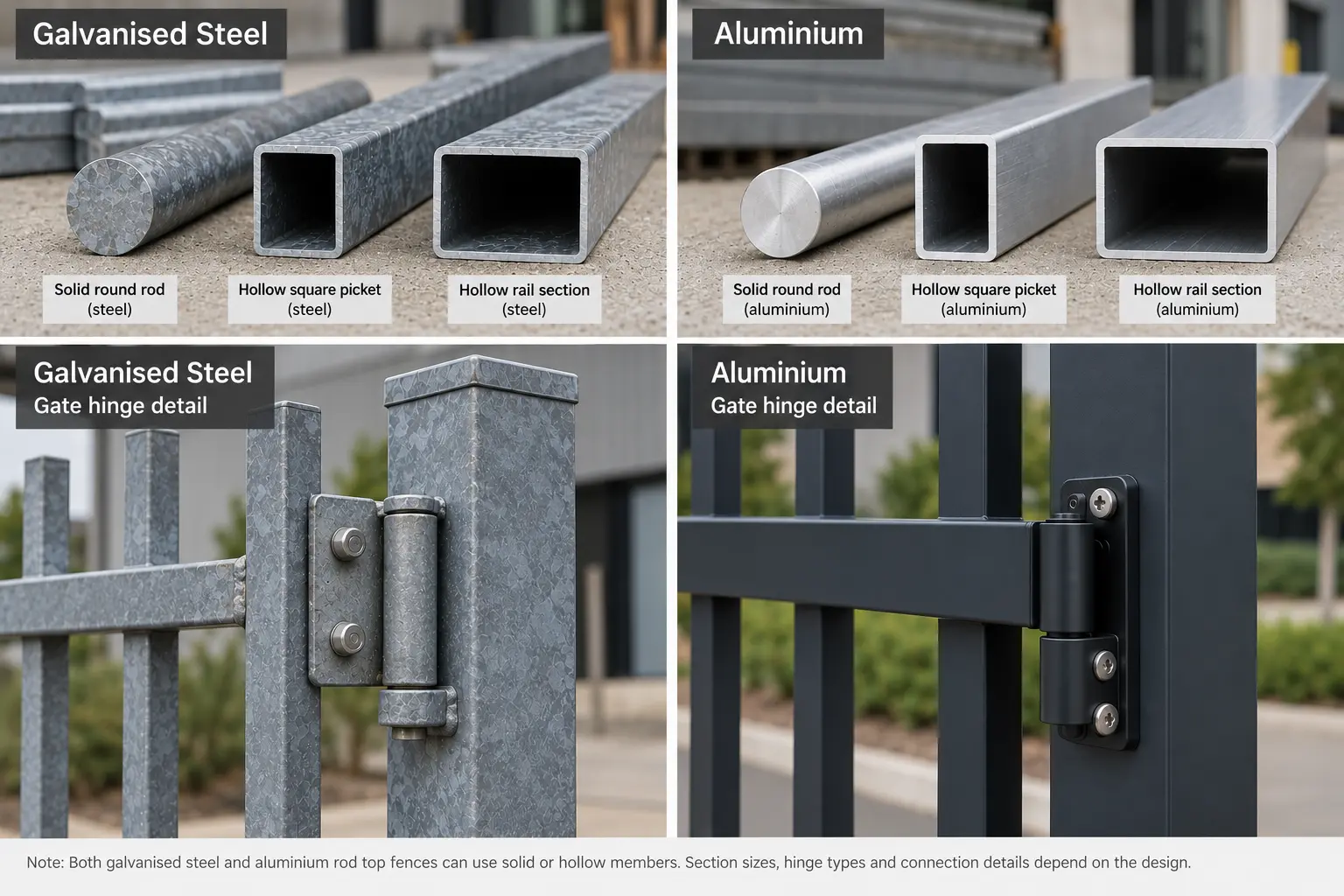
Aluminium is not immune to corrosion. Salt-containing moisture can cause pitting, while contact with another metal in a wet connection can create galvanic corrosion. Alloy selection, compatible fixings, electrical isolation where required and drainage remain important.
The aluminium specification should identify the alloy and temper—the material's treatment condition—as well as the profile and connections. A powder-coated surface cannot establish the strength of the underlying assembly.
Which Material Makes More Sense Near the Australian Coast?
Inspect the fence line and note direct salt spray, prevailing winds, areas sheltered from rain and joints that stay wet. These details are more useful than a city name when selecting a coastal coating system.
Salt exposure, wetting, drying and local conditions affect coastal galvanised steel performance. Match the protective finish to these conditions.
Use those site observations to compare the options:
- Where low weight and avoidance of red rust dominate: evaluate a suitably specified aluminium system first, while checking pitting and connection risks.
- Where rigidity and welded steel construction dominate: evaluate galvanised steel with a coating system suited to the exposure, including a properly specified powder finish where appropriate.
- Where salt deposits are persistent and cleaning access is poor: ask both suppliers for written exposure suitability and maintenance conditions before choosing.
A description such as “coastal grade” should identify the exposure conditions it covers. Check that the specified finish and maintenance instructions apply to the actual location.
For a deeper explanation of steel corrosion and maintenance, read whether galvanised steel fences rust.
Does Powder Coating Make the Two Materials Equally Durable?
No. Powder coating creates a coloured outer layer, but the material and preparation beneath it remain different.
A compatible coating over galvanised steel can provide additional protection and the required appearance. The coating system must suit the exposure and be correctly prepared and applied.
Ask which pretreatment and powder product are specified, how film thickness and cure will be checked, and what the warranty covers. Colour retention, coating adhesion and corrosion protection are separate claims. A finish warranty does not establish the service life of the whole fence.
Both materials require care of their coated surfaces. Follow the cleaning method and frequency specified for the coating actually supplied, including the requirements for coastal exposure.
How Should B2B Buyers Compare Durability Evidence?
Link each durability claim to a drawing, specification or inspection record. The following documents help identify differences that a product photograph cannot show.
| Ask for | Why it helps the comparison |
|---|---|
| Material grade and solid or hollow member details | Identifies what is behind the appearance |
| Rod or picket section, rails, span and connections | Makes the structural comparison meaningful |
| Steel galvanising sequence, or aluminium alloy and temper | Exposes differences hidden by generic material labels |
| Coating specification and inspection records | Connects the finish claim to measurable requirements |
| Gate frame, hinges, posts and replaceable hardware | Includes moving components in the durability decision |
| Exposure conditions, repair instructions and warranty exclusions | Shows what happens after delivery |
Check test reports for the tested sample, coating build-up, method and acceptance criteria. Salt-spray hours should not be converted directly into years outdoors; accelerated test conditions do not reproduce every aspect of service exposure.
If an offer says “more rigid”, request its performance basis. If it says “suitable for coastal use”, request the applicable exposure conditions. If it promises a long warranty, check whether that covers appearance, corrosion or structural defects.
TOPSFENCE's fence production process outlines the stages from drawing confirmation to inspection and packing. Specify the records needed for your order before production begins.
Which Material Will Last Longer?
A defensible lifespan comparison needs the actual steel and aluminium specifications, the same exposure assumptions and a defined endpoint. “Years until the finish needs attention” is different from “years until a panel needs replacing”.
For steel, assess zinc coverage and the protection of fabricated details. For aluminium, assess the alloy, connections and corrosion exposure. For both, include gates and hardware rather than judging the panels alone.
US projects exposed to road-deicing salts need that exposure included in the specification, even when the site is far from the coast. Neither country of installation nor material name provides a reliable lifespan figure.
Choosing the Better Fit
Choose galvanised steel when stiffness and welded construction are central to the design. Give particular attention to the galvanising sequence and protection at rod-to-rail joints.
Choose aluminium when lower weight and avoidance of red rust carry more weight in the decision. Confirm that the proposed profiles and connections meet the structural requirements and suit the exposure.
Approve the option whose drawings, finish specification and supporting records address the site's requirements. This gives the importer, installer and maintenance team a shared basis for checking the fence after delivery.