
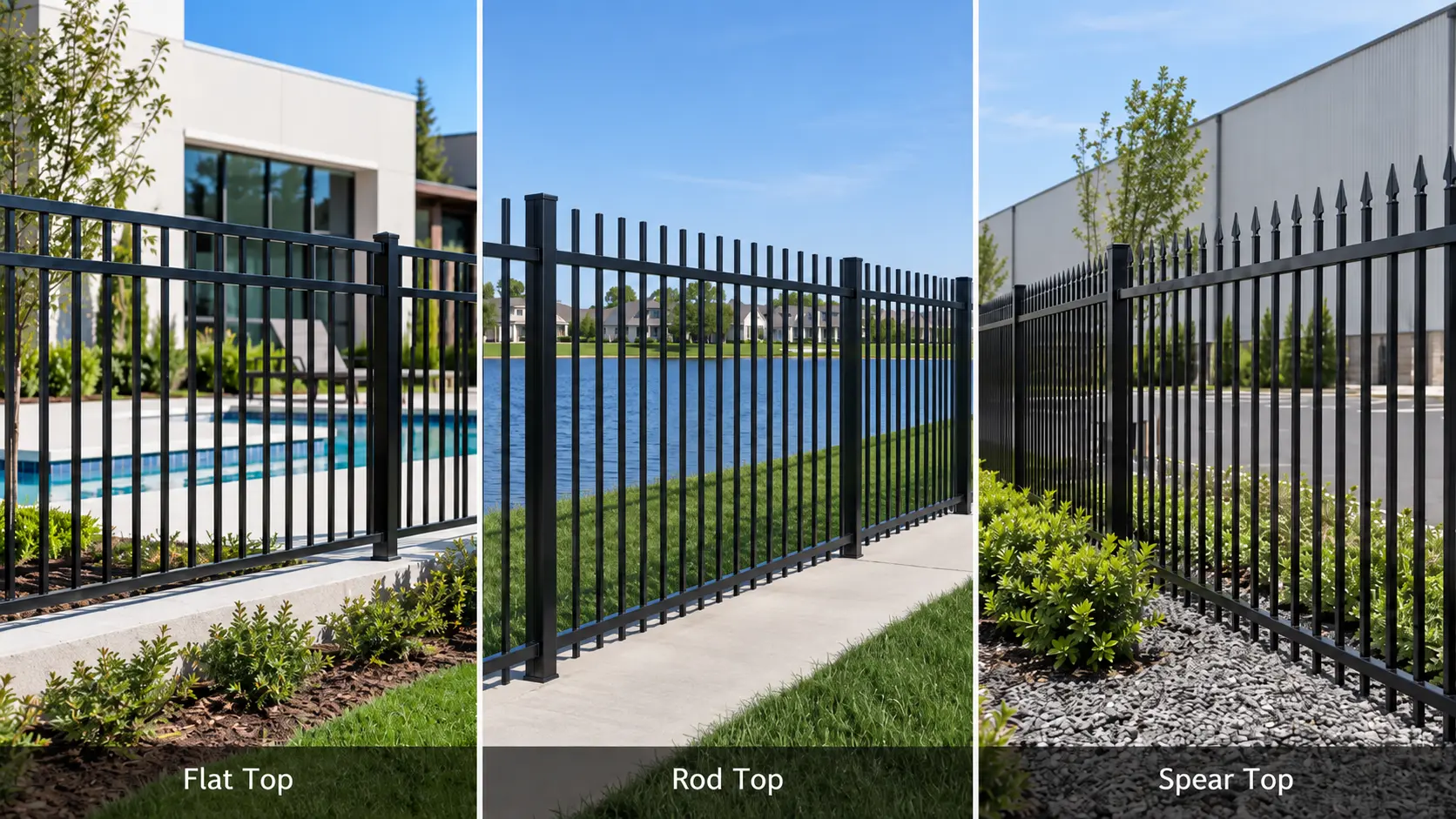
If you are comparing flat top, rod top and spear top fencing, the main difference is the way the top rail and vertical pickets are arranged.
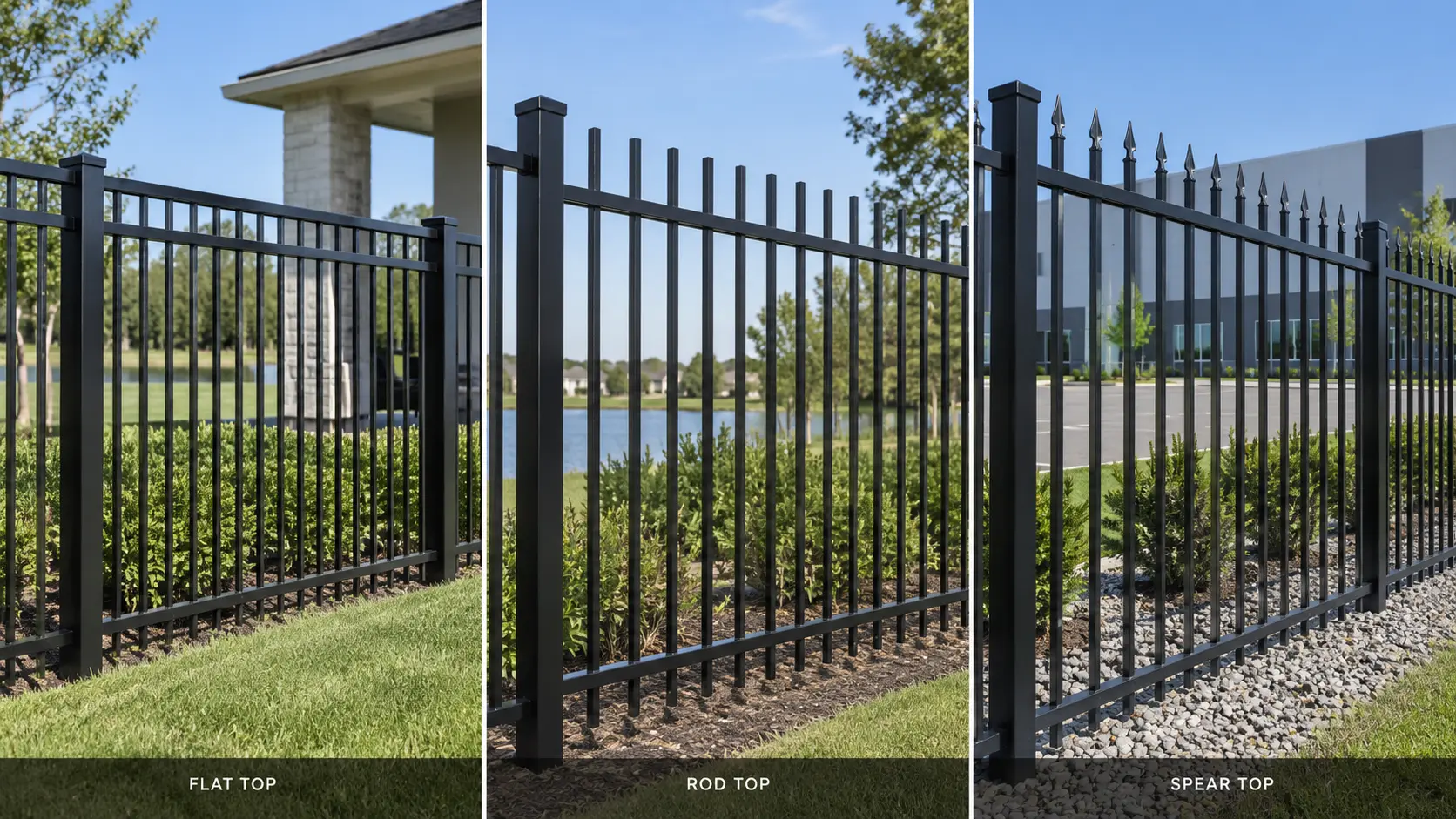
A flat top fence finishes with a clean horizontal top line. A rod top fence positions the upper rail lower so the vertical pickets extend above it. A spear top fence also has exposed pickets above the rail, but finishes them with pointed or spear-shaped heads.
As a quick guide:
- Choose flat top for the cleanest, most understated appearance.
- Choose rod top when you want more vertical definition without pointed tops.
- Choose spear top when stronger visual deterrence and a more security-oriented appearance are important.
That said, the top profile is only one part of the specification.
Fence height, picket spacing, rail position, steel or aluminium section sizes, posts, coating system, gates and fixing method all affect how the finished fence performs.
For Australian contractors, importers, distributors and project buyers, the better question is not simply “Which top looks best?”
It is:
“Which fence configuration best suits the site, performance requirement and project specification?”
Rod Top vs Flat Top vs Spear Top: Quick Comparison
| Feature | Flat Top | Rod Top | Spear Top |
|---|---|---|---|
| Top profile | Straight horizontal line | Pickets extend above upper rail | Pointed pickets extend above upper rail |
| Appearance | Clean and contemporary | Simple with stronger vertical definition | Traditional or security-oriented |
| Visual deterrence | Lower | Moderate | Higher |
| Visibility through fence | High | High | High |
| Residential applications | Common | Common | Project dependent |
| Commercial applications | Common | Common | Common |
| Security-focused perimeter | Depends on full system | Depends on full system | Often considered where deterrence is important |
| Fabrication detail | Relatively simple | Moderate | Usually more detailed |
| Main reason to choose | Clean appearance | Balance of simplicity and detail | Stronger perimeter presence |
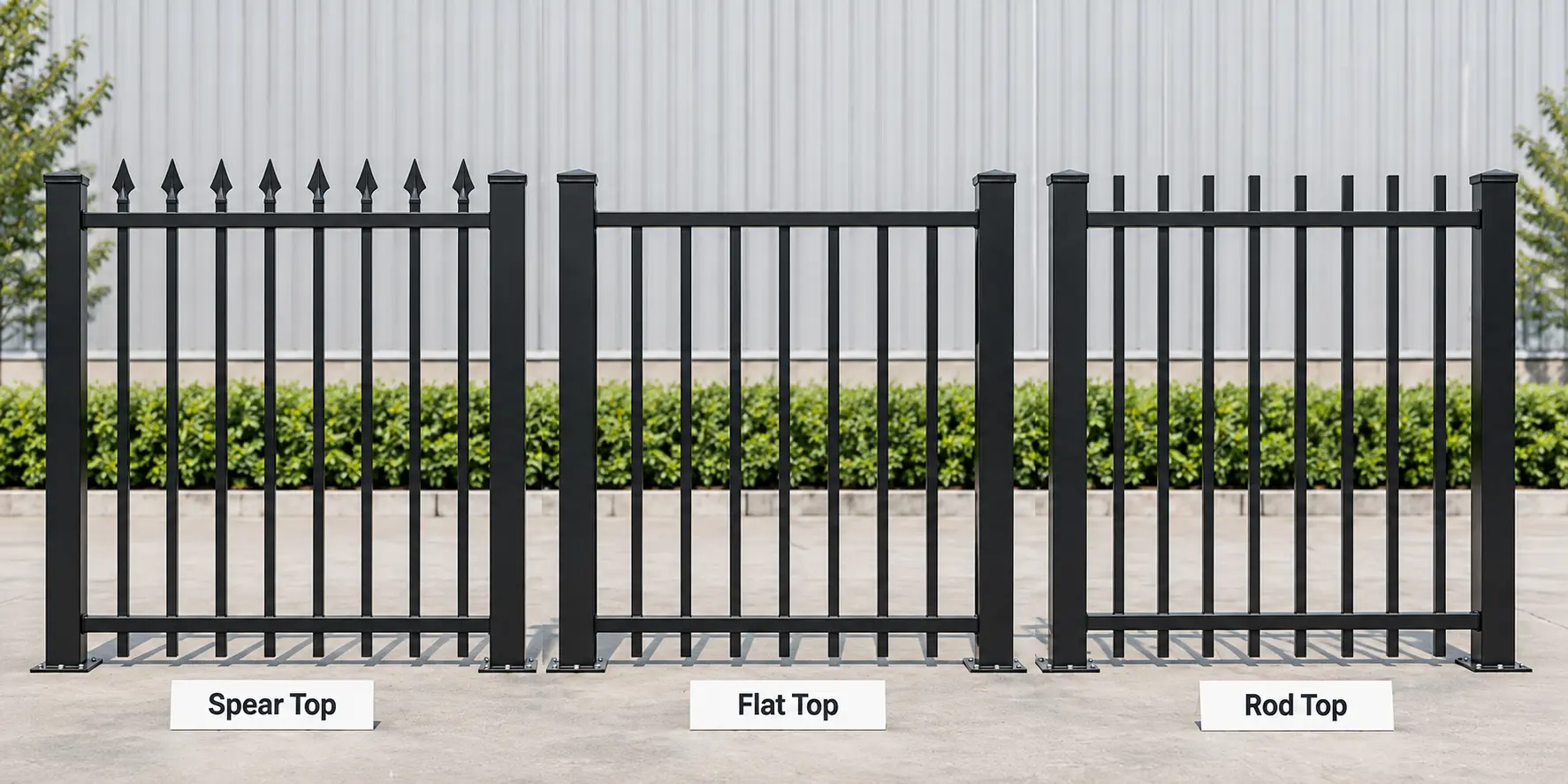
The key point is that the top style does not determine the full performance of the fence.
Two panels may have the same flat top or spear top appearance but use different picket sections, wall thicknesses, rails, posts, welds or coating systems.
Those differences can matter more than the shape at the top.
The Top Profile Is Only One Part of the Specification
Flat top, rod top and spear top describe the upper profile of the fence.
They do not automatically tell you:
- overall fence height
- panel width
- picket section
- picket wall thickness
- spacing between verticals
- rail section
- post size
- steel or aluminium grade
- galvanising method
- powder-coating system
- footing or base-plate arrangement
- gate construction
- overall security performance
This becomes particularly important when comparing quotations.
For example, two suppliers may both quote a “1.8 m spear top fence”, but one system may use lighter pickets and posts while the other is designed for a heavier commercial application.
The same principle applies to flat top and rod top fencing.
So when evaluating a fence for an Australian project, use the top style to define the appearance, then confirm the structural and coating specification separately.
Flat Top, Rod Top and Spear Top Explained
Flat Top Fencing
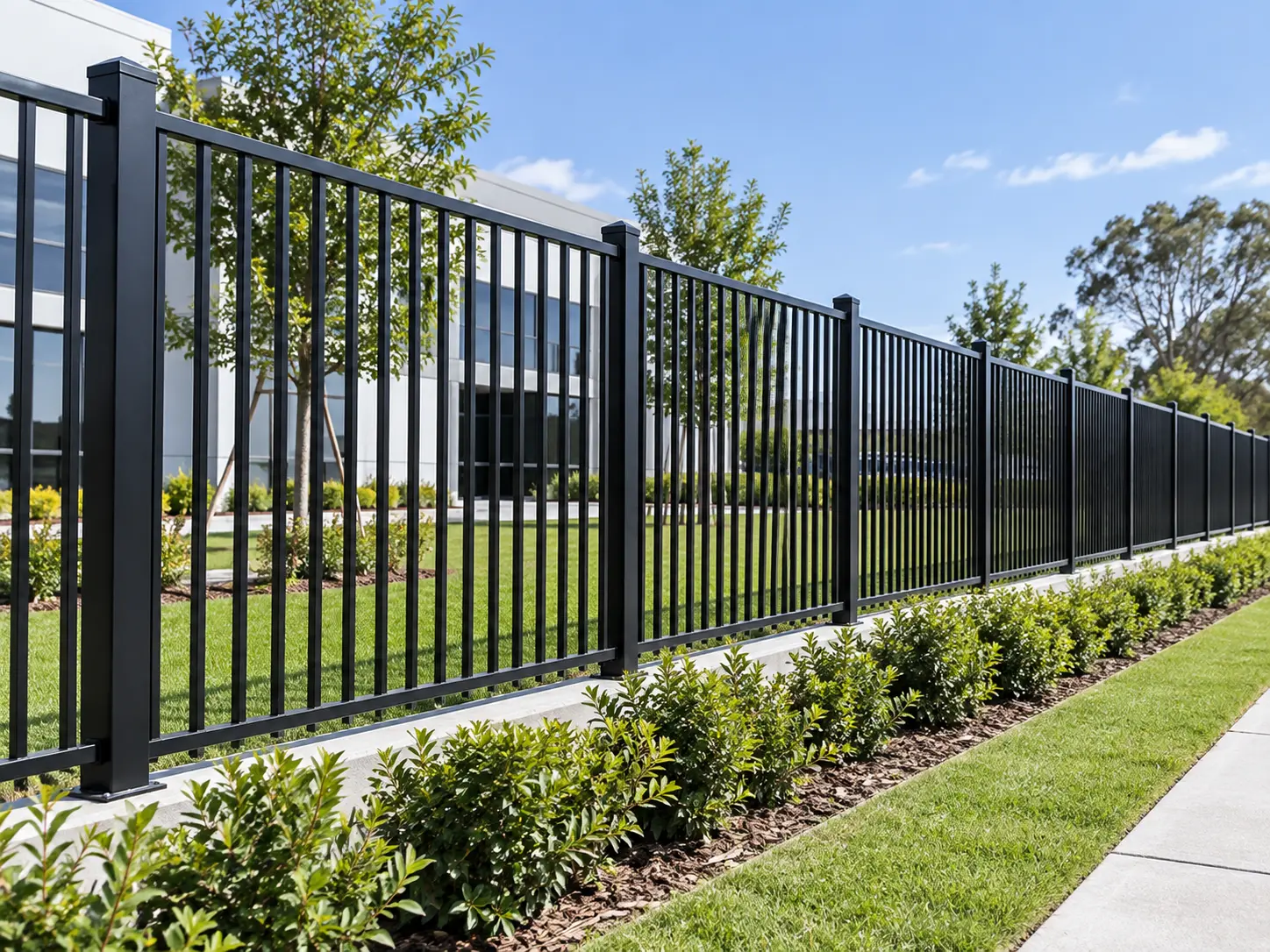
Flat top fencing uses a continuous upper rail to create a straight, uninterrupted top line.
It is often selected when the fence needs to look clean and architectural without becoming a dominant feature of the property.
Typical applications include:
- contemporary residential boundaries
- housing developments
- landscaped areas
- commercial frontage
- parks and open spaces
- general-purpose perimeter fencing
Its main advantage is visual simplicity.
A flat top fence can work with a wide range of architectural styles because it does not introduce pointed or highly decorative features.
For a project where the building, landscaping or frontage should remain the visual focus, flat top is often the easiest style to integrate.
Detailed panel dimensions, picket sizes, posts and finishes should be reviewed separately in the relevant product specification. See our flat top steel fence panels.
Rod Top Fencing
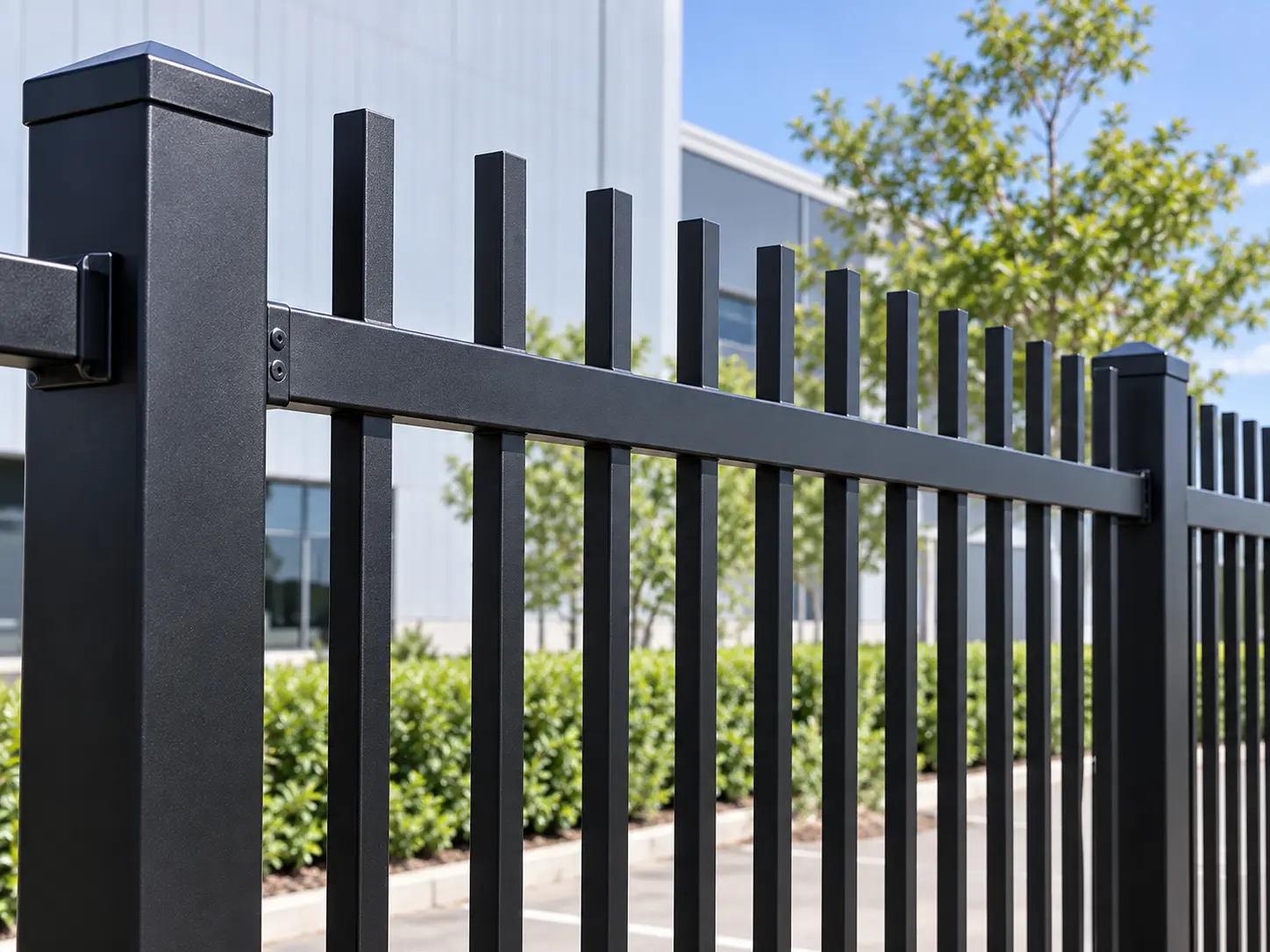
Rod top fencing places the upper rail below the top of the vertical pickets.
This leaves the rods visibly extending above the rail and creates a stronger vertical rhythm than a flat top panel.
It is a useful option where flat top looks too plain, but the project does not call for spear-shaped pickets.
Rod top fencing can suit:
- residential boundaries
- apartment developments
- commercial frontage
- landscaped perimeters
- general commercial fencing
From a design perspective, rod top sits between flat top and spear top. Review our steel rod fence panels for product specifications.
It has more definition than flat top, but less of the security-oriented character associated with spear heads.
Importantly, rod top describes the profile, not the material.
A rod top fence may be manufactured from galvanised steel or aluminium, and the two should be assessed separately for section size, stiffness, weight, corrosion protection and finish.
Spear Top Fencing
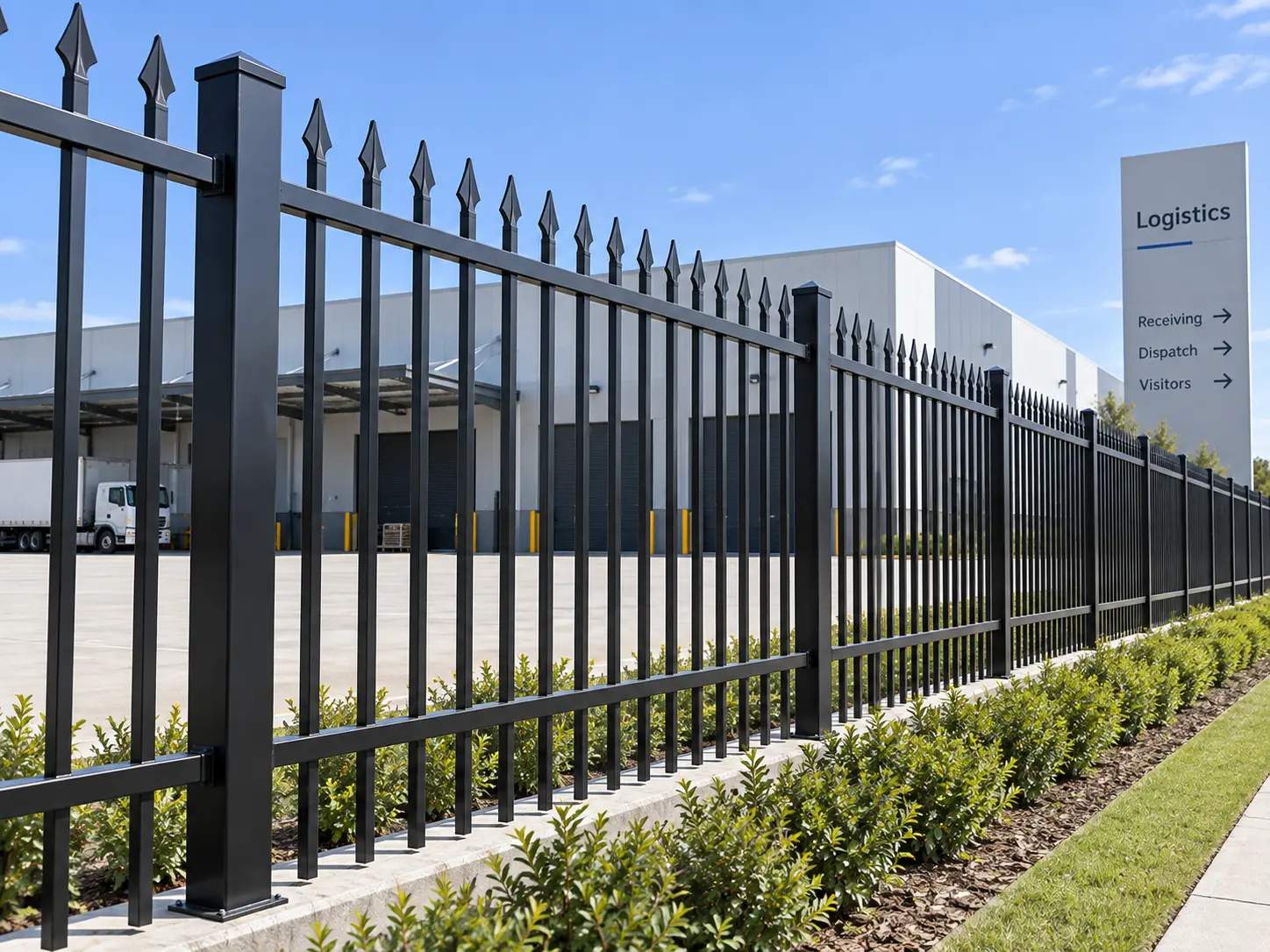
Spear top fencing uses vertical pickets that extend above the top rail and finish with a pointed or spear-shaped profile.
The result is a stronger perimeter appearance and a more obvious visual deterrent. See our steel spear top fence panels for configuration options.
It is commonly considered for:
- commercial properties
- warehouses
- industrial sites
- equipment storage areas
- residential estates
- controlled-access sites
- institutional boundaries
However, a spear top profile should not be confused with a complete high-security fencing system.
A fence can look aggressive while still being poorly specified.
Actual perimeter performance depends on height, spacing, rails, posts, welds, footings, gates, locks and installation quality.
For higher-risk sites, a dedicated anti-climb or security fencing system may be more appropriate than standard tubular spear top fencing. Review a 358 anti-climb fence system against the site requirements.
Which Fence Style Should You Choose?
Choose Flat Top for a Clean, Architectural Finish
Flat top is usually the most straightforward option when appearance, visibility and simplicity are the main priorities.
It works particularly well where the fence is intended to define a boundary without visually overpowering the building or landscape.
Consider flat top when:
- the project has a modern architectural style
- a clean streetscape is important
- pointed tops are unnecessary
- visibility through the fence should remain open
- the boundary should look simple and controlled
For longer fence runs, the continuous upper rail can also create a very consistent finished line.
Choose Rod Top for More Vertical Definition
Rod top is a good option when you want the open appearance of tubular fencing but with more visual detail than a standard flat top.
The exposed vertical pickets create a stronger rhythm along the fence line without introducing pointed spear heads.
Consider rod top when:
- flat top feels too plain
- you want the vertical pickets to remain visible above the rail
- the fence should have more character without looking overly decorative
- you want an open residential or commercial boundary
- security appearance is not the main driver
Rod top is therefore mainly an architectural choice, not an automatic security upgrade.
Choose Spear Top When Deterrence Matters More
Spear top becomes more relevant when the fence needs to communicate a stronger physical boundary.
Its pointed profile makes the fence appear less inviting to climb and can suit sites where deterrence forms part of the project brief.
Consider spear top when:
- the site is commercial or industrial
- perimeter control is important
- a more traditional or security-oriented appearance is suitable
- the fence is part of a controlled-access system
- the owner wants a stronger visual boundary
But the spear profile should never be assessed in isolation.
If the posts are too light, the gate is poorly secured or the fence height is inadequate, the pointed top will not compensate for the weakness elsewhere in the system.
Which Style Suits Different Australian Projects?
The best option depends on what the fence needs to achieve.
| Project Type | Styles to Consider | Main Decision Factor |
|---|---|---|
| Residential front boundary | Flat / Rod / Spear | Architecture and street presentation |
| Housing development | Flat / Rod | Repeatability, appearance and specification |
| Commercial frontage | Flat / Rod / Spear | Presentation and boundary control |
| Warehouse perimeter | Rod / Spear | Height, deterrence and gate design |
| Industrial perimeter | Spear or dedicated security fencing | Full security requirement |
| School or public facility | Project-specific, often non-pointed profiles worth considering | User safety and project requirements |
| Pool-related barrier | Project-specific compliant system | Barrier geometry, gates and applicable requirements |
A modern residential development may suit a flat or rod top system because appearance and consistency are the priorities.
A warehouse or industrial boundary may place much more emphasis on height, gates, post strength and deterrence.
The important point is to choose the style after defining the job the fence needs to do.
Is Spear Top Fencing Actually More Secure?
A spear top can provide greater visual and physical deterrence, but it does not determine the security level of the fence on its own.
A meaningful security assessment should also look at:
- overall height
- picket spacing
- picket section
- horizontal rail position
- available climbing points
- post section
- weld quality
- footing or base fixing
- gate frame design
- hinges
- locks and latches
- access-control hardware
- installation quality
For commercial and industrial projects, these factors are usually more important than simply choosing the most aggressive-looking top profile. Our guide to spear top security fencing examines these system details.
If security is the primary requirement, ask:
“What fence and gate system matches the risk level of this site?”
rather than:
“Should we use rod top or spear top?”
For some projects, welded mesh, anti-climb fencing, blade fencing or another specialist perimeter system may be more suitable.
What About Australian Pool Fence Requirements?
Pool barriers need to be treated as a compliance issue first and a style choice second.
A panel should not be assumed to be suitable for a pool barrier simply because it is described as flat top, rod top or spear top.
Australia's AS 1926.1:2024, Swimming pool safety — Safety barriers for swimming pools, covers the design and construction of pool safety barriers, including matters such as non-climbable zones and gate components.
For an actual project, the full barrier configuration should be checked against the requirements that apply to the property and jurisdiction.
Relevant factors can include:
- barrier height
- openings and gaps
- climbable features
- ground clearance
- surrounding objects
- gate operation
- hinges and latches
- nearby structures
This is why generic statements such as “this fence is pool compliant” should be treated carefully unless the complete installed configuration has been assessed.
If the fence is intended for a pool application, confirm the current project requirements before manufacturing or installation.
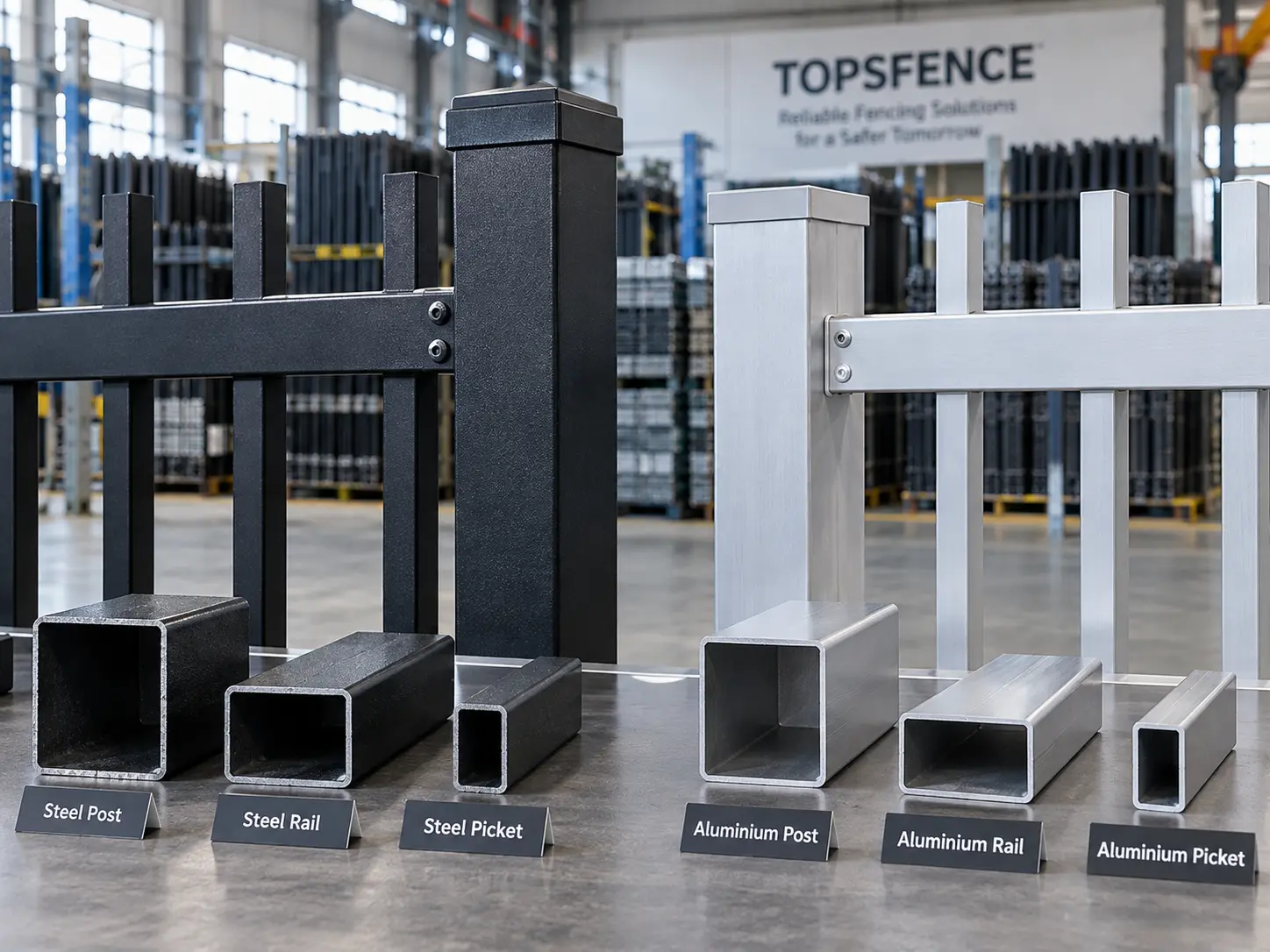
Steel or Aluminium? Keep Material and Style Separate
Flat top, rod top and spear top describe the profile.
Steel and aluminium describe the material.
They are separate specification decisions.
A rod top fence, for example, may be manufactured in galvanised steel or aluminium while keeping a similar visual design.
However, the two materials can differ in weight, stiffness, section requirements and corrosion behaviour. Read our comparison of galvanised steel vs aluminium rod top fencing for a closer material review.
| Consideration | Steel | Aluminium |
|---|---|---|
| Stiffness at comparable geometry | Generally higher | Generally lower; larger or different sections may compensate |
| Weight | Higher | Lower |
| Corrosion protection | Depends strongly on galvanising and coating system | Does not form red rust, but alloy and finish still matter |
| Large gates | Extra weight must be considered | Lower dead load can be an advantage |
| Key specification items | Section, wall thickness, galvanising, coating | Alloy, profile, wall thickness, finish |
The same rule applies to all three fence styles:
Do not judge durability from the top profile.
Material, section size, coating system and environment need to be assessed separately.
What Should Australian Buyers Specify Before Asking for a Quote?
A useful quotation starts with a clear specification.
Before asking suppliers to compare flat top, rod top or spear top fencing, confirm as many of the following as possible:
- Fence style
- Panel height
- Panel width
- Picket section
- Picket spacing
- Rail section
- Post size
- Base-plated or embedded posts
- Gate openings
- Gate type
- Steel or aluminium
- Galvanising requirement
- Powder-coat colour
- Quantity
- Packing requirement
- Delivery destination
- Drawings or tender specification, if available
This avoids a common problem in fence procurement: comparing prices for products that are not actually equivalent.
Two quotations may both say “1.8 m black steel spear top fence”, while using very different steel sections, wall thicknesses, posts and coatings.
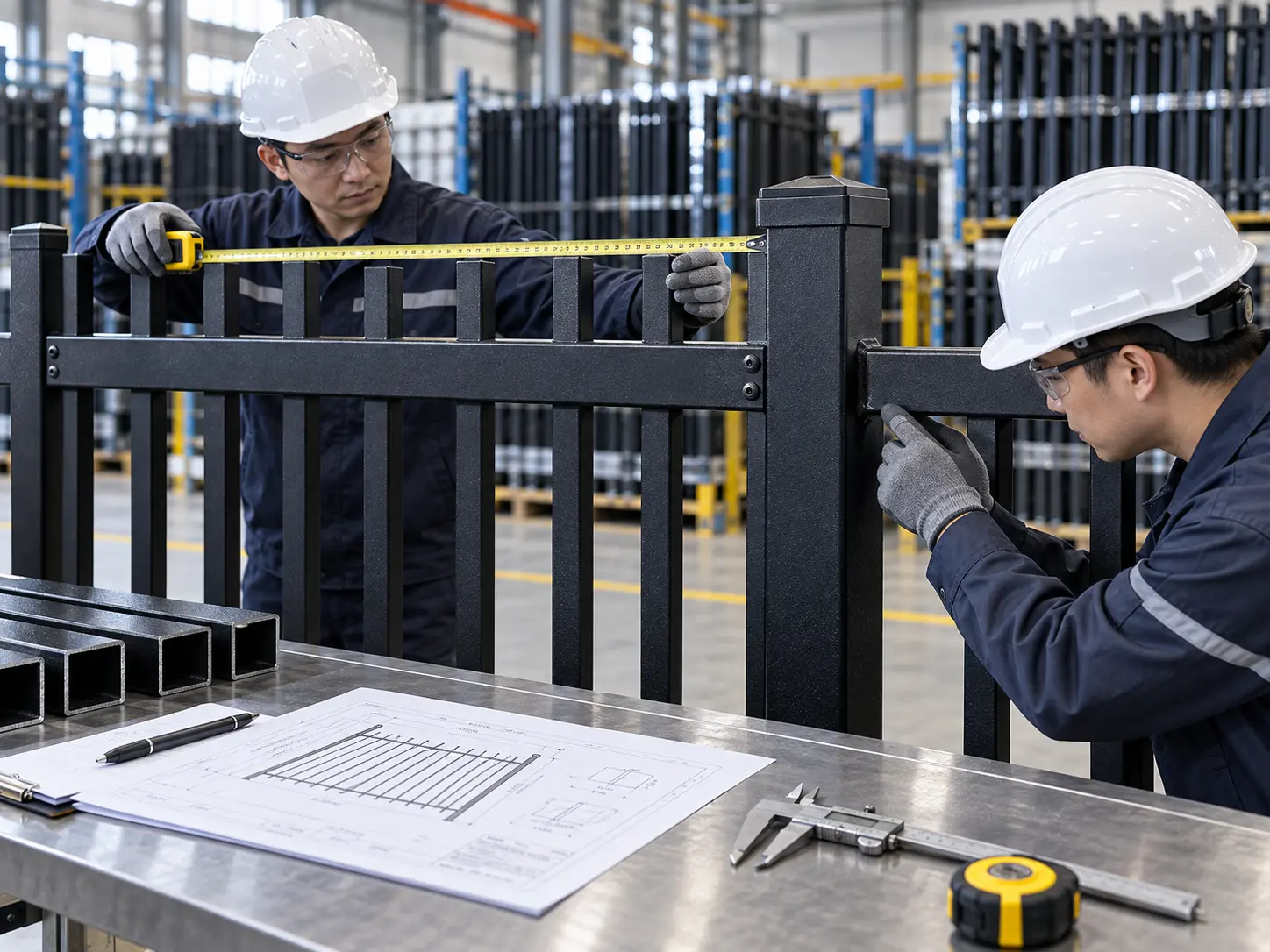
For contractors, importers and distributors, drawings are usually more useful than reference photographs alone.
A clear drawing allows the manufacturer to review panel geometry, post spacing, gates and fixing details before the quotation is finalised. See our fence production process for the steps from drawing review to packing.
Quick Decision Guide
Choose Flat Top if:
- you want the cleanest appearance
- contemporary design is important
- pointed tops are unnecessary
- open visibility is required
- the fence should blend into the architecture
Choose Rod Top if:
- flat top feels too plain
- you prefer visible pickets above the upper rail
- you want stronger vertical lines
- you do not want spear-shaped tops
Choose Spear Top if:
- visual deterrence is important
- the site suits a more security-oriented appearance
- the fence forms part of a commercial or industrial perimeter
- the project calls for a pointed profile
Consider another fencing system if:
- anti-climb performance is the primary requirement
- the project requires a higher security level
- privacy is a major objective
- the specification calls for mesh, blade or another specialist system
The right fence is not necessarily the one that looks the strongest.
It is the one where the profile, structure, material, coating, gates and fixing system all match the project requirement.
Frequently Asked Questions
What is the main difference between rod top and flat top fencing?
Flat top fencing finishes with a continuous horizontal top line. Rod top fencing positions the upper rail lower so the vertical pickets extend above it. The main difference is therefore the upper profile and visual appearance.
Is rod top fencing stronger than flat top fencing?
Not necessarily. Strength depends on the picket section, rail size, posts, material, welds and fixing system. The fact that the pickets extend above the rail does not automatically make a rod top fence stronger.
Is spear top fencing more secure than rod top fencing?
Spear top can provide greater visual and physical deterrence, but security depends on the complete system. Fence height, spacing, posts, rails, gates, locks and installation all need to be considered.
Which fence style looks more modern?
Flat top generally gives the cleanest and most contemporary appearance. Rod top can also work well with modern architecture where more vertical definition is preferred.
Which style is best for a commercial property?
Any of the three may be suitable. Flat top can work well for presentation-focused frontage, rod top provides more visual definition, and spear top is often considered where deterrence is more important. The choice should follow the site's architectural and security requirements.
Can all three styles be manufactured in steel?
Yes. Flat top, rod top and spear top tubular fencing can all be manufactured in steel, subject to the required dimensions and fabrication specification.
Which style costs less?
There is no reliable answer based on top profile alone.
Panel height, steel weight, picket spacing, rails, posts, gates, surface treatment, order quantity, packing and delivery can all affect price.
For an accurate comparison, suppliers should quote against the same specification.
Comparing Flat Top, Rod Top and Spear Top for an Australian Project?
If you are still deciding between the three styles, start with the project requirement rather than the top profile alone.
For a useful technical comparison or quotation, provide:
- required fence height
- panel size
- preferred material
- gate sizes
- quantity
- project drawing or reference image
- coating requirement
- delivery destination
TOPSFENCE can review the information and compare suitable flat top, rod top or spear top configurations before quotation.