
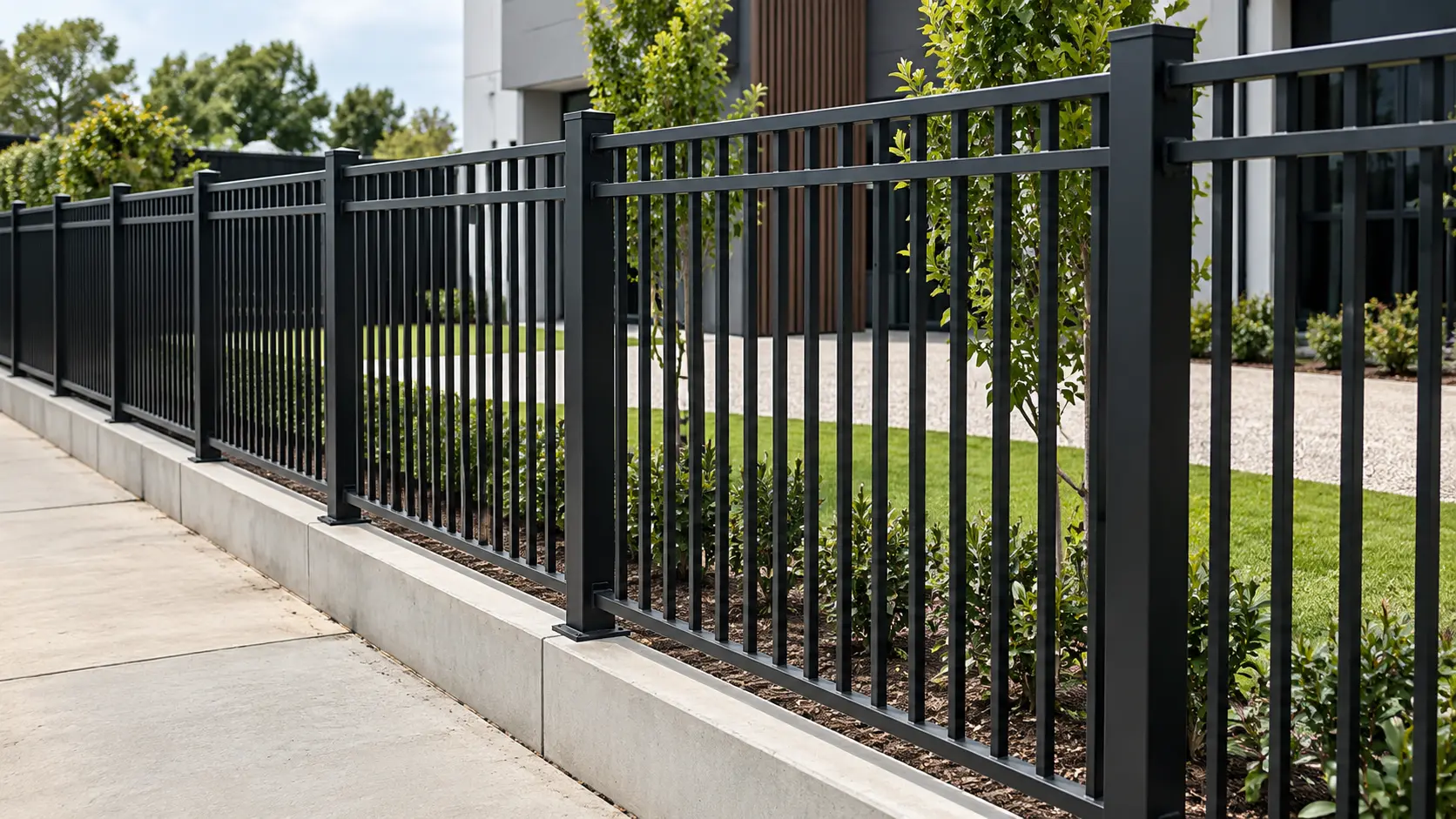
Steel and timber can both be suitable fencing materials, but they behave very differently once a project requires consistent dimensions, defined structural sections, controlled finishes and repeatable production.
For B2B buyers, the real question is not simply whether steel or timber is better. It is which fencing system better matches the project requirements.
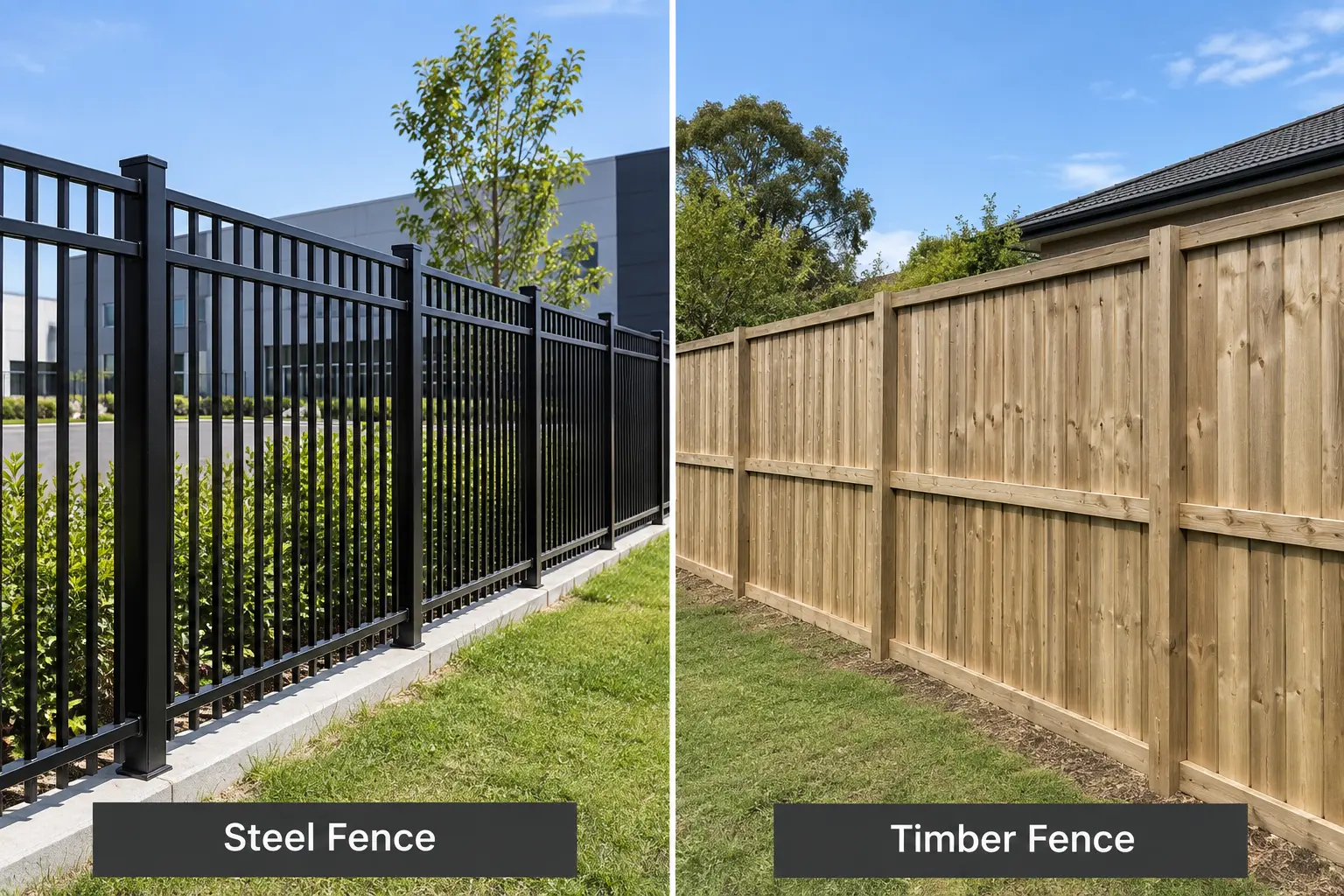
Timber is often practical where natural appearance, solid screening and easy on-site adjustment are priorities. Steel fencing becomes more relevant where a project requires factory-made panels, repeatable dimensions, controlled finishes and custom manufacturing.
Appearance alone is not enough to judge a steel fence. Two black steel fence panels can look almost identical while using different profile sizes, wall thicknesses, post sections, weld construction and coating systems.
For the broader material decision, see our guide to wood vs metal fencing.
Steel vs Timber Fencing at a Glance
| Factor | Steel fencing | Timber fencing |
|---|---|---|
| Manufacturing consistency | Repeatable factory-made dimensions | Natural material variation is normal |
| Structural specification | Profiles, wall thicknesses, posts and spacing can be defined | Species, treatment, boards, rails and posts matter |
| Main durability concern | Corrosion protection and coating condition | Moisture, rot, pests and weathering |
| Routine maintenance | Generally lower, but coatings and connections still need inspection | Usually requires more surface and material maintenance |
| Site adjustment | Best when dimensions are confirmed before fabrication | Generally easier to cut and modify on site |
| Security applications | Wide range of decorative and heavier perimeter systems | Depends strongly on construction |
| Large repeat orders | Strong manufacturing consistency | Greater natural variation |
| Custom production | Well suited to project-specific dimensions and finishes | Often more dependent on site construction |
Steel vs Timber Fencing Cost
A simple price per metre rarely gives B2B buyers enough information to compare steel and timber fencing properly.
Steel fencing cost can change according to:
- panel height and width
- profile dimensions
- wall thickness
- post section
- profile spacing
- fabrication
- galvanising
- powder coating
- order quantity
- packing
- freight destination
Timber fencing cost can vary according to:
- timber species
- preservative treatment
- board or paling dimensions
- posts and rails
- fence height
- surface finish
- labour
- local material availability
This is why two quotations with similar-looking fences may not represent the same supply scope.
A lower steel fence price may reflect smaller sections, thinner walls or a different coating system. A lower timber fence price may be based on a different species, treatment level or construction method.
Total project cost = initial supply + installation + maintenance + repairs + replacement + logistics
Timber may offer a lower initial cost in some applications. Steel may become more competitive where consistent production, lower routine maintenance and larger repeat quantities are important.
The key is to compare like with like.
Which Lasts Longer: Steel or Timber Fencing?
There is no fixed lifespan that applies to every timber fence or every steel fence.
The result depends on material quality, specification, installation, maintenance and exposure.
Timber durability
Timber may be affected by:
- moisture
- rot
- termites and other pests
- splitting
- warping
- surface weathering
- deterioration around posts or ground contact
The actual risk depends on timber species, treatment and site conditions.
Steel durability
Steel has a different durability concern: corrosion.
Its long-term performance can be influenced by:
- galvanising
- surface preparation
- powder coating
- weld areas
- cut edges
- coating damage
- drainage
- connections
- fasteners
- environmental exposure
A well-specified steel fence and a poorly specified steel fence are not equivalent simply because both are made from steel.
Does the complete fencing specification match the expected environment and service conditions?
Why Steel Fence Specifications Matter
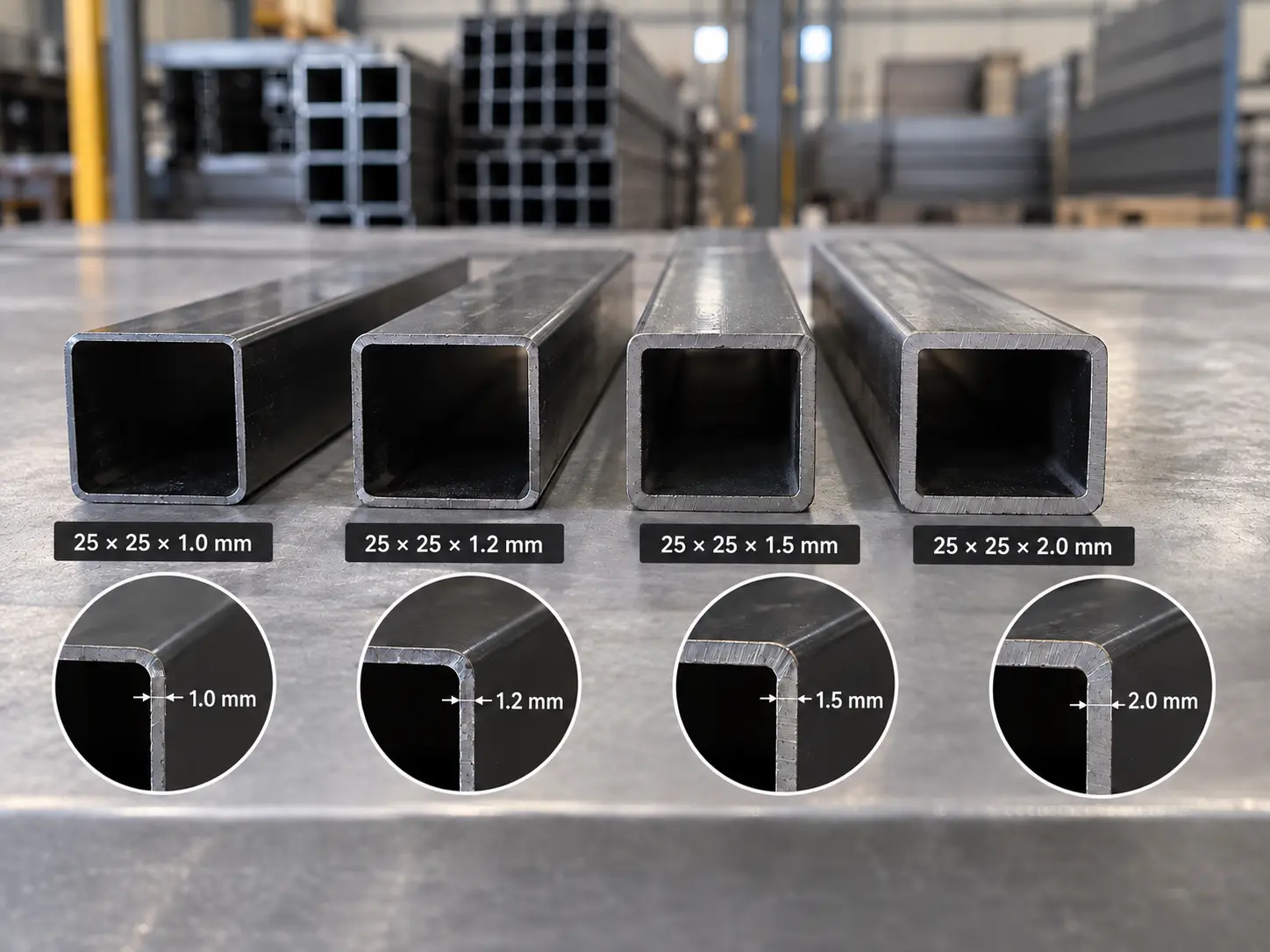
Steel fencing can be manufactured very consistently, but only when the required specification is clearly defined.
Profile size and wall thickness
Two steel profiles with similar outside dimensions can use different wall thicknesses.
That difference may be difficult to see after finishing, but it changes material weight and the overall product specification.
Panel dimensions
Panel height and width affect more than appearance.
A wider panel changes the relationship between horizontal rails, vertical profiles, posts and connections.
Post specification
The fence panel is only one part of the system.
Post section, wall thickness, centres and fixing method also need to match the project requirements.
Profile spacing
Spacing affects:
- appearance
- visibility
- material usage
- security
- overall panel design
Weld construction
Welding and treatment of fabricated areas are part of manufacturing quality.
A high-quality coating cannot compensate for poor fabrication underneath it.
This is why steel fencing should be compared by specification rather than photographs alone.
Galvanising, Powder Coating and Steel Fence Durability
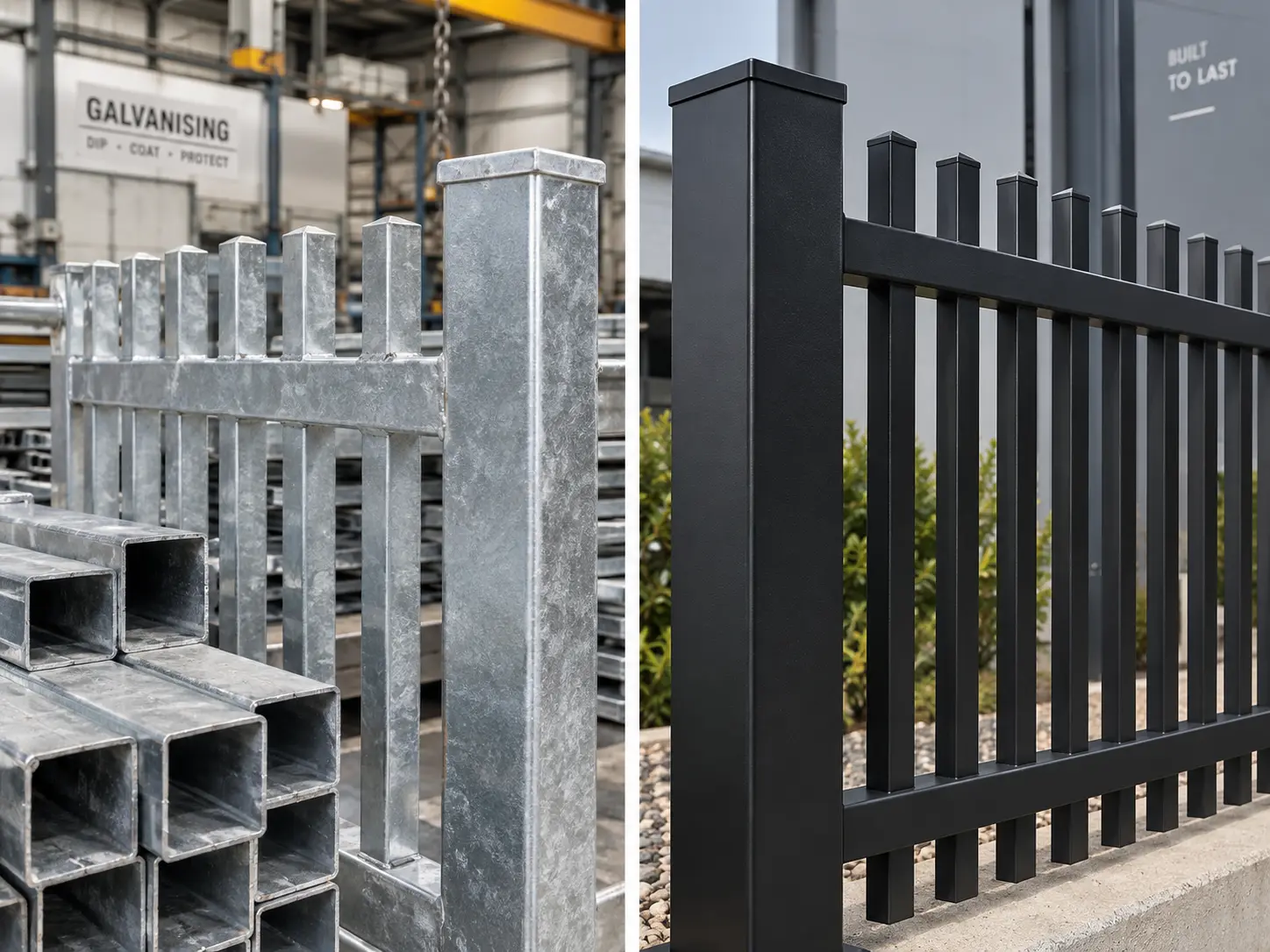
Corrosion protection is one of the main differences between specifying steel fencing and specifying timber fencing.
Galvanising provides zinc-based protection to the steel. Read more about galvanised steel fencing and corrosion protection.
Powder coating provides a finished surface, colour and an additional protective layer when used as part of a suitable coating system.
They are not necessarily alternatives.
Depending on the project, steel fencing may use:
- galvanised steel
- powder-coated steel
- galvanised and powder-coated steel
- another project-specified protection system
For B2B buyers, the important question is not simply whether a fence is black, galvanised or powder coated.
What corrosion-protection system is actually being supplied?
This becomes particularly important when comparing products from different manufacturers. Two finished panels can look very similar while using different surface preparation and coating systems.
What Actually Determines Steel Fence Strength?
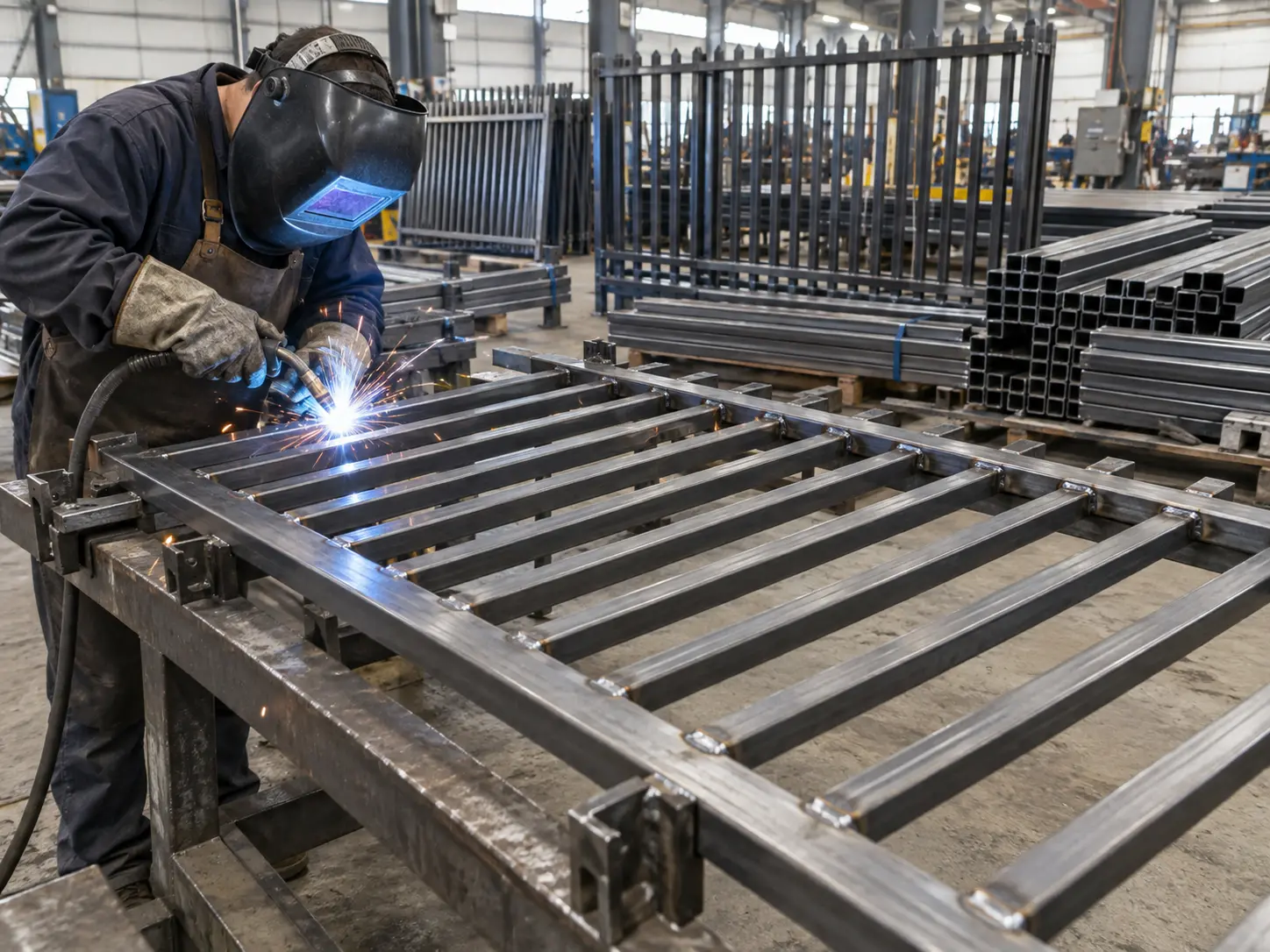
Calling a fence “steel” does not define its finished strength.
The complete construction matters.
Important factors include:
- profile dimensions
- wall thickness
- panel height
- panel width
- post section
- post centres
- vertical profile spacing
- rail construction
- welded connections
- panel-to-post connections
- fixing method
- installation conditions
For example, two panels can use vertical profiles with the same outside dimensions but different wall thicknesses.
Likewise, increasing panel width without considering rails and posts changes the complete system.
This is why drawings and dimensioned specifications are particularly useful for OEM and custom projects.
They allow the buyer and manufacturer to confirm the same panel dimensions, sections, spacing, posts and finish before production begins.
Steel vs Timber Fence Maintenance
Steel fencing generally requires less routine surface maintenance than timber, but neither material is maintenance-free.
Timber fence maintenance
Depending on the timber and environment, maintenance may include:
- painting or staining
- sealing
- checking for rot
- checking for pests
- replacing damaged boards
- checking posts
- managing moisture exposure
Steel fence maintenance
Steel maintenance usually focuses on:
- cleaning
- inspecting coatings
- repairing damaged finishes
- checking exposed areas
- checking connections and fixings
- inspecting fabricated areas
- identifying corrosion early
For a larger project, these differences can affect lifecycle cost.
Maintenance should therefore be considered during material selection rather than only after installation.
Steel vs Timber Fencing for Security
Security depends on the complete fencing system rather than the base material alone.
A timber fence can provide an effective boundary, especially where solid visual screening is required.
Steel fencing allows more control over:
- fence height
- profile spacing
- rail position
- post specification
- connection details
- fixing method
- anti-climb configuration
- visibility through the perimeter
Different steel fence designs can therefore be manufactured for decorative, commercial or more security-oriented applications.
The correct choice depends on the actual perimeter requirement.
When Timber Fencing Makes More Sense
Timber may be more practical where the project prioritises:
- natural appearance
- traditional styling
- solid visual privacy
- frequent on-site cutting
- irregular boundaries
- easy individual-board replacement
- site-built construction
Its flexibility during installation can be a genuine advantage.
When Steel Fencing Makes More Sense
Steel may be more suitable where the project requires:
- repeatable factory-made panels
- defined profile dimensions
- specified wall thicknesses
- consistent spacing
- controlled finishes
- larger repeat quantities
- commercial perimeter fencing
- security-oriented designs
- OEM manufacturing
- custom drawings
- export packing
- project-specific production
For B2B buyers, one of steel fencing's biggest advantages is that the required specification can be defined before production and repeated across the order.
What to Send for a Custom Steel Fence Quote
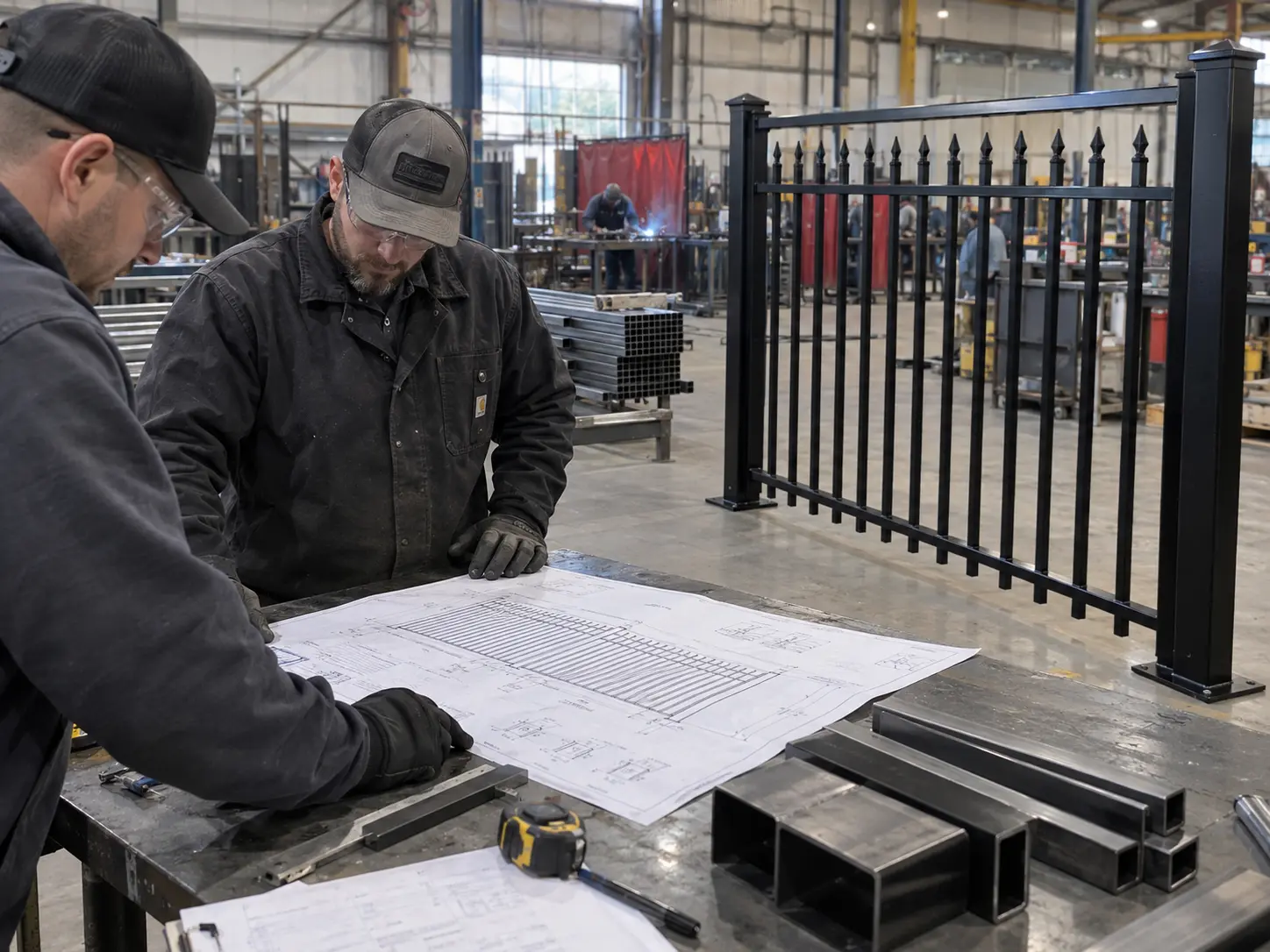
Once a project has moved from material selection to steel fence procurement, a clear project brief makes quotation much easier.
Useful information includes:
- drawing or reference image
- fence style
- panel height and width
- required profile dimensions
- wall thickness, if specified
- post requirements
- profile spacing
- finish
- colour
- quantity
- packing requirements
- destination
If the final specification has not yet been completed, a drawing, reference product or target configuration can still provide a useful starting point.
When comparing steel fence quotations, compare the actual specification rather than appearance alone.
TOPSFENCE accepts OEM and custom project requirements. If you already have drawings, target dimensions or a required fence configuration, send your project details for review and quotation.
Frequently Asked Questions
Is steel fencing more expensive than timber fencing?
Not always. Basic timber fencing may have a lower initial cost in some applications, while fabricated steel fencing may involve more controlled manufacturing and finishing. The useful comparison is the complete project cost rather than the initial material price alone.
Which lasts longer, steel or timber fencing?
There is no universal answer. Timber performance depends on species, treatment, moisture, pests and maintenance. Steel performance depends on fabrication, corrosion protection, coating quality, installation and exposure.
Does steel fencing require less maintenance than timber?
In many applications, yes. Timber often requires more regular surface maintenance, while steel maintenance focuses more on coating condition, damaged areas and connections.
What should buyers compare in steel fence quotations?
Compare panel dimensions, profile dimensions, wall thickness, post specification, spacing, fabrication, coating system, quantity, packing and complete supply scope. Two visually similar products are not necessarily the same specification.
Can steel fencing be made to custom project requirements?
Yes. Steel fencing is well suited to OEM and custom production because panel dimensions, profiles, spacing, posts, finishes and quantities can be confirmed before manufacturing.
Final Takeaway
Steel vs timber fencing is ultimately a comparison between two different project systems.
Timber is often practical where natural appearance, privacy and on-site flexibility are important.
Steel is particularly suitable where the project requires repeatable manufacturing, defined specifications, controlled finishes and custom production.
For B2B buyers, the most reliable comparison is not simply steel versus timber.
It is one complete fence specification versus another.
If you already have a drawing, fence schedule or target specification, send it to TOPSFENCE for a custom project review and quotation.